


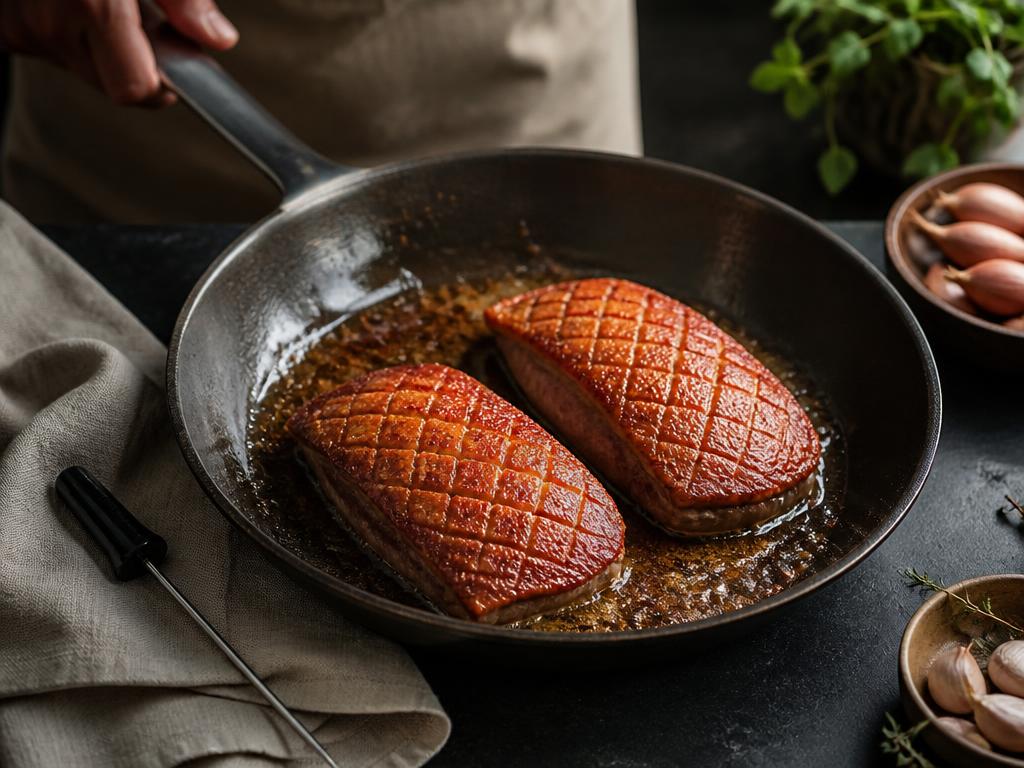
Duck breast
Pan-Seared Duck Breast
Score, render cold, and finish hot for shatteringly crisp skin over a rosy, evenly cooked centre.
- Total
- 28 min
- Serves
- 2
- Level
- Easy
Better Duck. A More Delicious World.
Duck breast with crackling crisp skin, whole roast duck for the table, what to do with all that rendered duck fat, the equipment that actually earns its space, and where to buy duck you'll be glad you paid for.
Six pillars: cook it, learn it, buy it, equip for it, season it, and time it right.
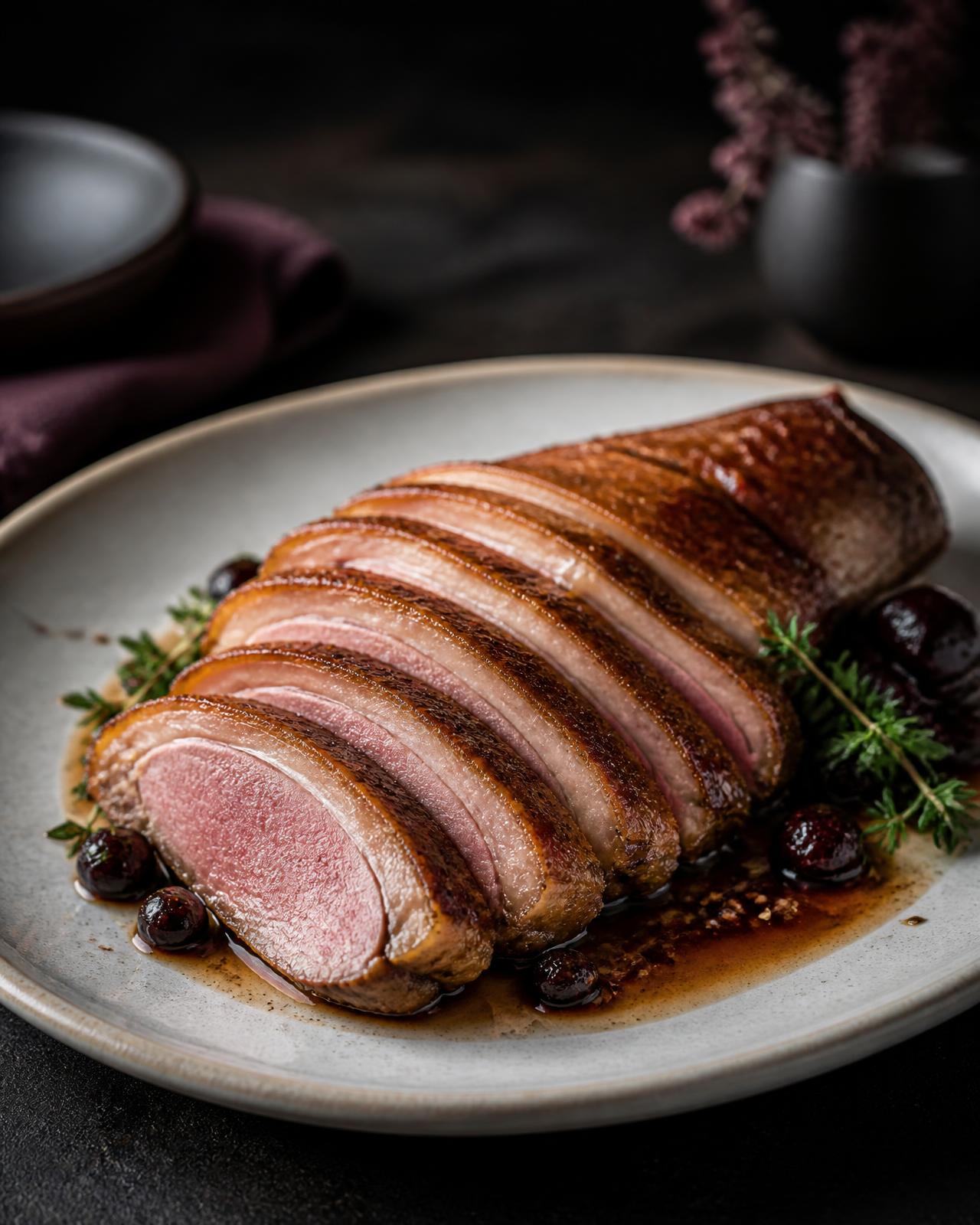
Four honest starting points. Pick the one that matches tonight.
Start with a recipe that teaches the technique: crisp-skin breast, a whole roast bird, or slow-cooked legs.
Compare the ways duck actually reaches a home kitchen, and what to check the moment the box arrives.
A whole duck needs somewhere for the fat to go. This is how to judge a roasting pan by size and material.
Get Duck the Fundamentals: the printable 28-page playbook with cut-specific routes, temperature and probe guidance, Duck SOS troubleshooting and detachable kitchen sheets.
Six routes into duck, whether you are searching for a technique, comparing where to buy, or working out how much to cook tonight.
The recipes worth learning first. Cooking duck comes down to three of them: pan-seared duck breast for crisp skin, roasting a whole duck for the table, and knowing what internal temperature duck is done at. Each one teaches a technique that carries over to every other duck dish.
Score, render cold, and finish hot for shatteringly crisp skin over a rosy, evenly cooked centre.
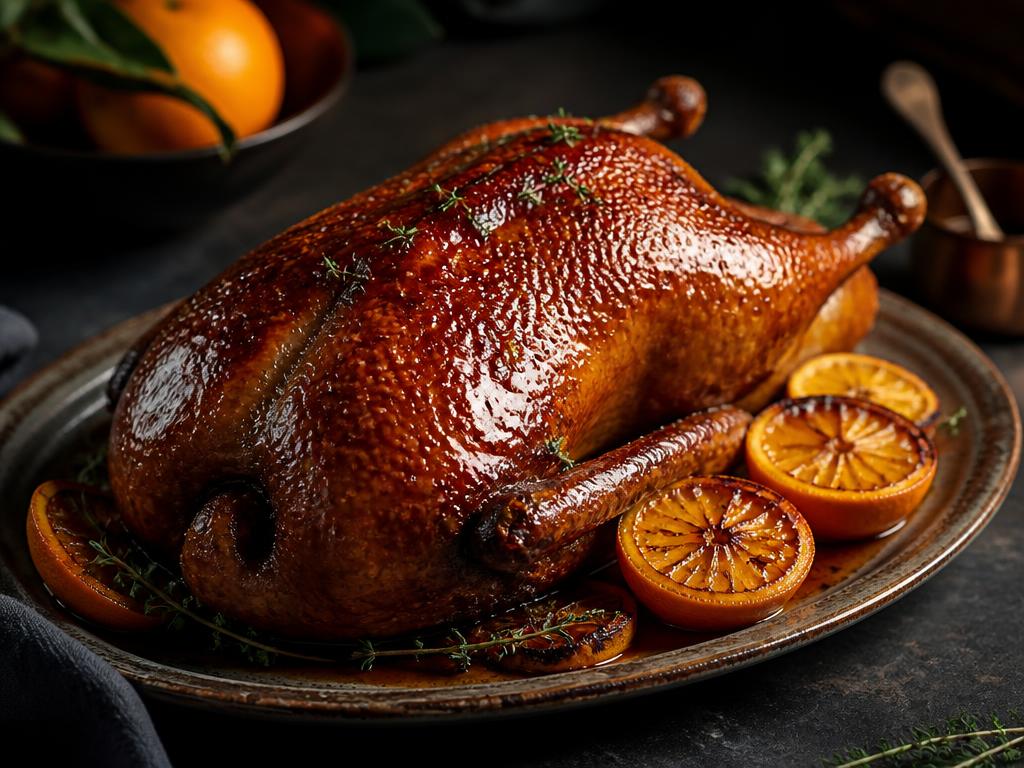
A whole duck roasted in two stages, served with a bitter-orange gastrique built from the pan drippings — sharp and glossy rather than sweet.
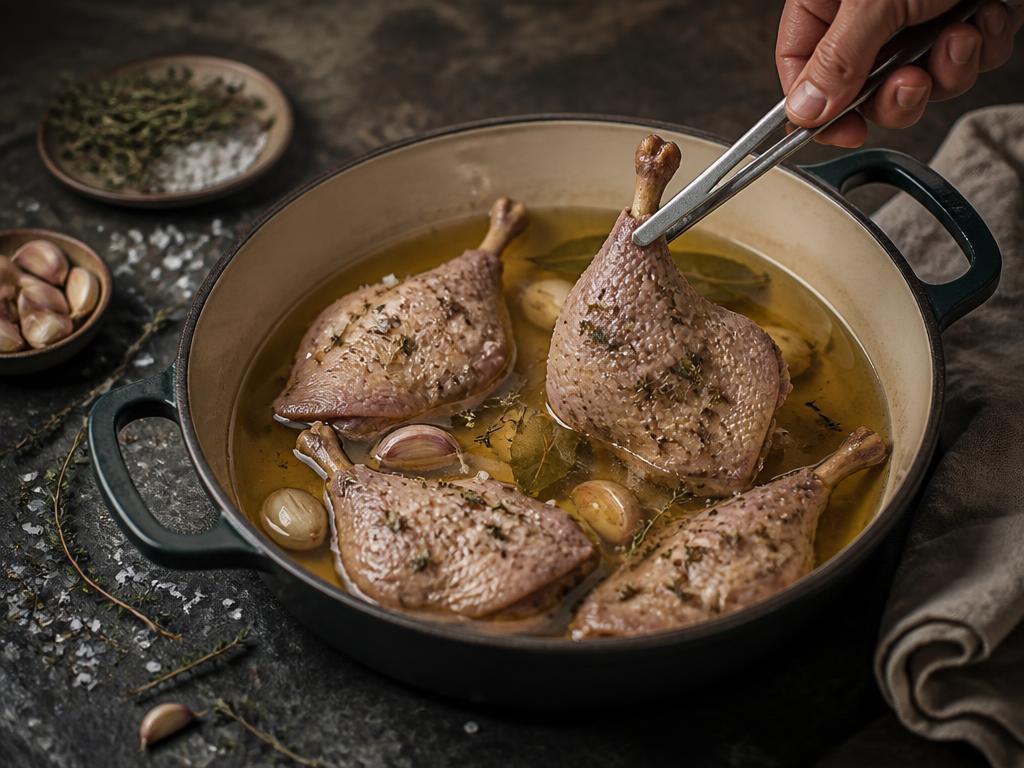
Salt-cured legs poached slowly in their own fat, then crisped to order — the most forgiving duck there is.
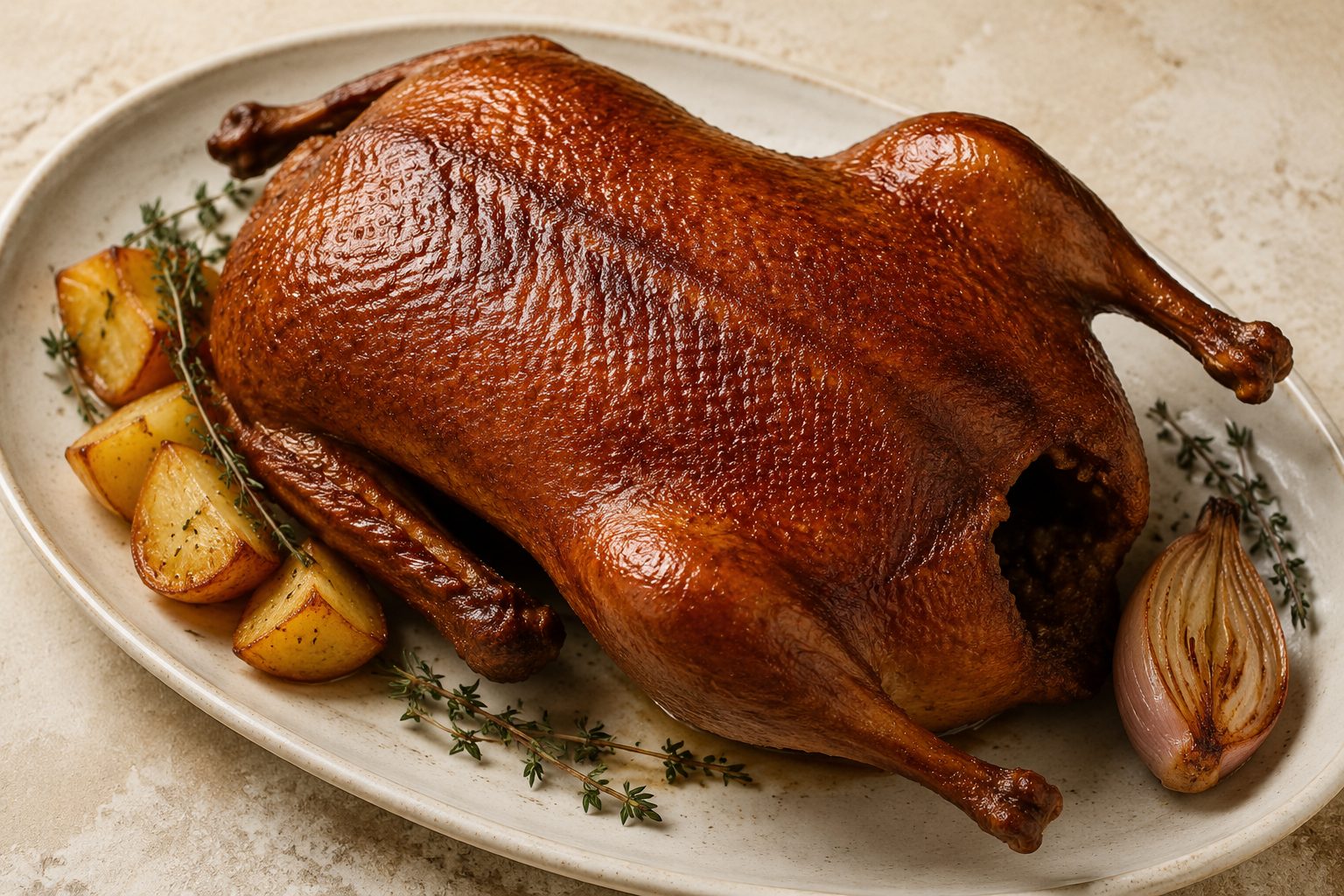
A two-stage roast that renders the fat cap, keeps the breast juicy, and gets the legs fully tender.
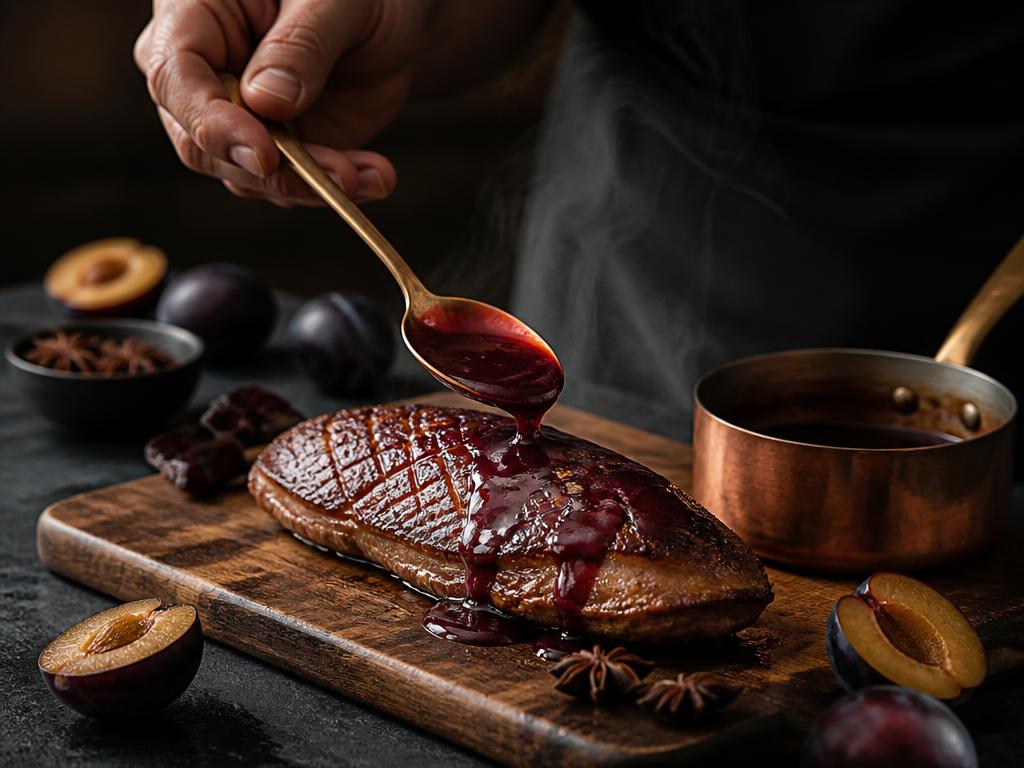
Gentle smoke, careful temperature control, and a sharp-sweet plum reduction to cut the richness.
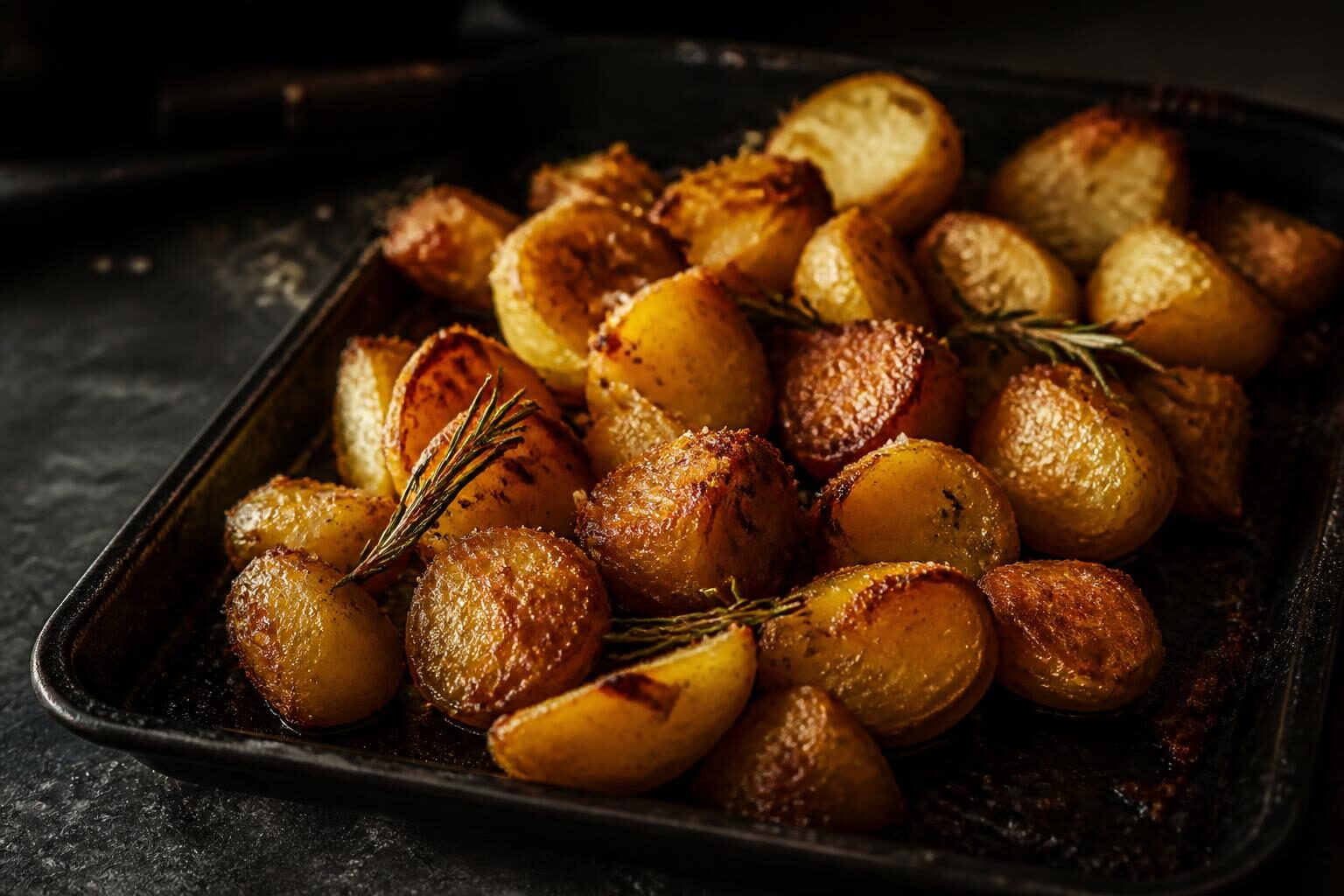
Parboiled, roughed up, and roasted in preheated duck fat until the outsides shatter and the insides stay fluffy.
Small, focused calculators and references for the moments when you need a number, not an essay.
See all toolsTell us what you're cooking and we'll build your temperature, timing, crispy-skin and serving game plan — then send it to you with The Duck Drop, our short course on the fundamentals.
Three decisions worth getting right before you cook: how you will know the bird is done, what you will sear breast in, and whether to render duck fat or buy it.
Best for: Breast cooked rosy, and thighs taken further.
Duck breast has a narrow window between rosy and grey, and a thigh reading is what actually ends a roast. Speed and probe thickness are the things to judge.
Best for: Skin-on breast, started cold in a dry pan.
Thermal mass and an uncoated surface are what keep the fat rendering steadily instead of stalling when a cold breast hits the metal.
Best for: Confit, and potatoes worth the detour.
One bird gives you a jar; confit wants a tub. The guide covers formats, label terms and how long an opened one keeps.